
Services
Loft Insulation Top-Ups in Middlesbrough & the North East
Bringing thin or settled loft insulation up to the recommended 270mm, checked first and laid evenly across the whole loft.
- Topped up to 270mm
- Existing layer checked first
- Eaves kept clear
- Free assessment
About this service
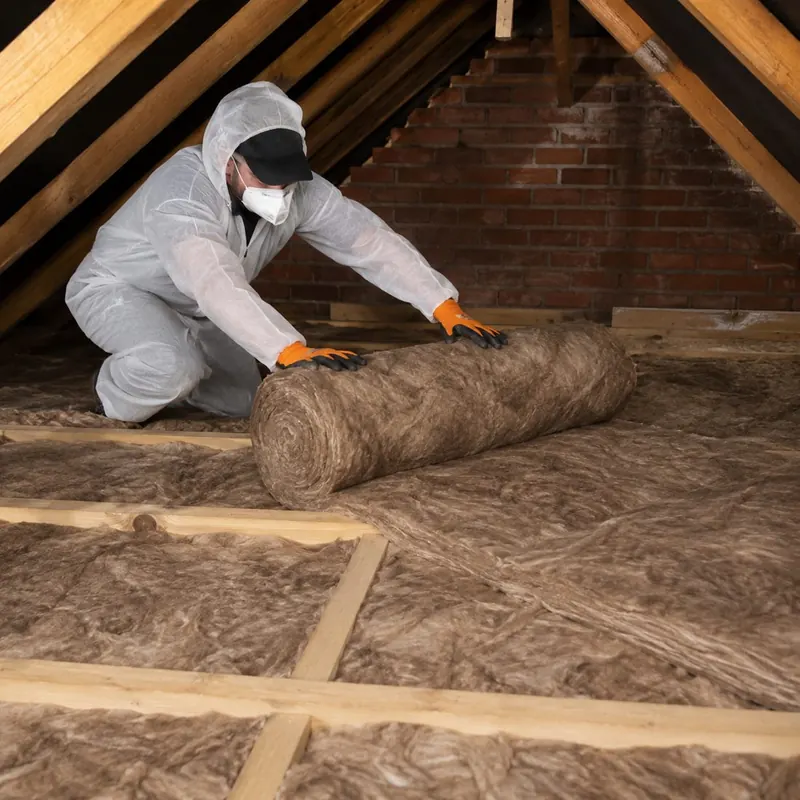
A top-up adds new mineral wool over the insulation you already have, bringing the total to 270mm. We check the existing layer is clean and dry first, so nothing is hidden underneath.
What’s included
- Free assessment of existing depth and condition
- Gaps filled and old insulation levelled
- Knauf Earthwool cross-laid to 270mm
- Eaves kept clear for airflow
- Hatch insulated and draught-stripped
- Tanks and pipes insulated
Priced after a free assessment: see what affects the cost. You get a written quotation before any work is agreed.
A loft insulation top-up adds new insulation on top of the layer you already have, bringing it up to the recommended depth of 270mm. It is the most common loft job we do. Many homes were insulated years ago to a fraction of that depth, and even a decent layer settles, gets flattened by storage or is disturbed by other trades over time.
A top-up builds on what is there rather than starting again, which usually makes it a simpler job than a full installation. But it only makes sense if the existing insulation is clean, dry and sound, so we always check first. This page explains how a top-up works and when it is the right choice. For the bigger picture, see our main loft insulation page.
Who a top-up suits
- Lofts with a thin layer of insulation, typically 25mm to 150mm, where the tops of the joists are visible or only just covered.
- Homes where the original insulation is in reasonable condition but has settled or thinned.
- Lofts where insulation was laid in patches, leaving gaps at the edges, around the hatch or where cables have been run.
- Anyone who has bought a home and found the loft only partly insulated.
Many of the older homes we see across Teesside, County Durham and Tyne & Wear, from Victorian and Edwardian terraces to inter-war and post-war semis, had their lofts insulated decades ago to the standards of the time. That thin layer is often still there, and topping it up is usually the sensible next step.
Signs your loft needs a top-up
- You can see the joists. If the timbers show through, you have well under 270mm.
- Bedrooms are cold in winter compared with the rest of the house.
- The insulation is uneven, thick in one place and thin or bare in another.
- It has been squashed by boxes, old boarding or people walking on it.
Our article on the signs your loft needs a top-up covers these in more detail, and how thick should loft insulation be? explains how to measure yours.
How a top-up is done
Measuring and checking first
At the free assessment we measure the existing depth in several places and look at its condition. Is it dry? Is it clean? Is it evenly spread? We also check the eaves, the hatch, any tanks and pipes, wiring and downlights, and look for signs of damp or rodents. This tells us how much needs adding and whether a top-up is really the right answer.
Levelling out the existing layer
Before any new material goes down, existing insulation that has been pushed aside or bunched up is eased back into place, and gaps between the joists are filled. Bare patches around the hatch and at the edges are common, and are dealt with as part of the job.
Cross-laying new insulation
New Knauf Earthwool mineral wool is laid across the existing layer at right angles to the joists. This covers the timbers, which would otherwise let heat escape, and staggers the joins. The aim is an even 270mm across the whole loft, not just the middle.
Keeping the eaves clear
Insulation should come right up to the wall plate but must not block the airflow at the eaves, where fresh air comes into the loft. If old insulation has been stuffed into the eaves, we pull it back and can fit eaves vent trays to hold a clear air path open. Read more on our loft ventilation page.
Hatch, tanks and pipes
The hatch door is insulated and draught-stripped. Cold water tanks are insulated on the top and sides, and exposed pipes are lagged, because the loft will be colder once the floor is properly insulated.
When a top-up is not the right answer
We will tell you honestly if a top-up is not the right job. Laying new insulation over a problem only hides it. A full strip-out may be better if the existing insulation is:
- Damp or mouldy, from a roof leak or condensation.
- Soiled by rodents or birds, with droppings, nesting or urine staining.
- Badly compressed or degraded, so that it adds little.
In those cases we recommend loft insulation removal first, then fresh insulation. Where there are signs of mice or rats, rodent proofing should come before new insulation goes in, and where there is mould, the cause needs fixing first; see mould and condensation.
Storage and boarding
At 270mm, the insulation sits well above the top of most ceiling joists. If boards are screwed straight onto the joists, they crush the insulation underneath and undo much of the benefit. If you want to keep using the loft for storage, raised loft boarding lifts the boards clear of the insulation. It can be fitted on the same visit as the top-up. Our guide to boarding over loft insulation explains why it matters.
What affects the cost of a top-up
The price depends on the size of the loft, how much insulation is already there, how easy the loft is to get into and work in, and any extras such as eaves vents, hatch insulation or boarding. You get a written quotation after the free assessment, setting out the scope, materials and price. See our loft insulation cost guide for more on each factor, and loft insulation grants for information on funding schemes (eligibility depends on your circumstances).
Who does the work
Top-ups are carried out by The Insulation Company or an approved installation partner. Eligible installations come with a written guarantee of up to five years; the terms are set out in your quotation.
Areas we cover
We cover Middlesbrough and Teesside, County Durham, Tyne & Wear, Northumberland, North Yorkshire and York, and parts of West Yorkshire and the East Riding. See all the areas we cover, or call 0800 229 4668 to book a free assessment.
The process
How we handle loft insulation top-up
- 1
Free assessment
We measure the existing insulation, check its condition and look at the eaves, hatch, tanks, wiring and any damp or pests.
- 2
Written quotation
You get the scope, materials and price in writing. If a top-up is not right, we say so and explain why.
- 3
Preparation
The landing is protected, the existing layer is levelled and gaps between the joists are filled.
- 4
Top-up
New Earthwool is cross-laid to 270mm, with the eaves kept clear and the hatch, tanks and pipes dealt with.
- 5
Completion checks
Depth and coverage are checked, the landing is tidied and you are shown the finished loft.
Loft Insulation Top-Up: your questions answered
How do I know if my loft needs a top-up?
If you can see the tops of the joists, you almost certainly have less than 270mm. Cold bedrooms, uneven or flattened insulation and gaps around the hatch are other signs. A free assessment will confirm it.
Do you remove the old insulation first?
Not if it is clean, dry and in reasonable condition. We level it out and lay new insulation over it. If it is damp, mouldy or soiled by rodents, we recommend removing it first.
Why is the new layer laid across the joists?
Cross-laying covers the tops of the timbers, which would otherwise let heat through, and staggers the joins between rolls so there are no straight gaps.
Can I still store things in the loft after a top-up?
Not directly on the insulation, because that squashes it. Raised loft boarding lifts a storage floor above the full 270mm and can be fitted at the same time.
Will a top-up make my loft damp?
It should not, as long as the loft stays ventilated. We keep the eaves clear and draught-strip the hatch so less moist air reaches the cold roof space.
How long does a top-up take?
It depends on the size of the loft and what else is involved. Most straightforward top-ups are short, and your quotation will tell you what to expect.
How much does a loft insulation top-up cost?
It depends on the loft size, the existing depth, access and any extras. You get a written quotation after the free assessment; see our cost guide for what affects the price.
Free, no obligation
Ready to arrange a free loft assessment?
Tell us about your property and we will review your loft requirements, then provide a written recommendation and quotation before any work begins.