
Services
Loft Mould & Condensation in Middlesbrough & the North East
Finding why your loft is damp, fixing the cause and treating the mould, so it does not come back next winter.
- Cause found and fixed
- Ventilation put right
- Mould treated
- Loft work only
About this service
Loft mould is nearly always caused by condensation: more moist air getting into the loft than can get out. We fix the ventilation, the hatch and the insulation, then treat the mould.
What’s included
- Free assessment of the cause
- Blocked eaves cleared and vent trays fitted
- Hatch insulated and draught-stripped
- Advice on fans venting into the loft
- Fungicidal treatment of affected timbers
- Damp insulation removed and replaced
Priced after a free assessment: see what affects the cost. You get a written quotation before any work is agreed.
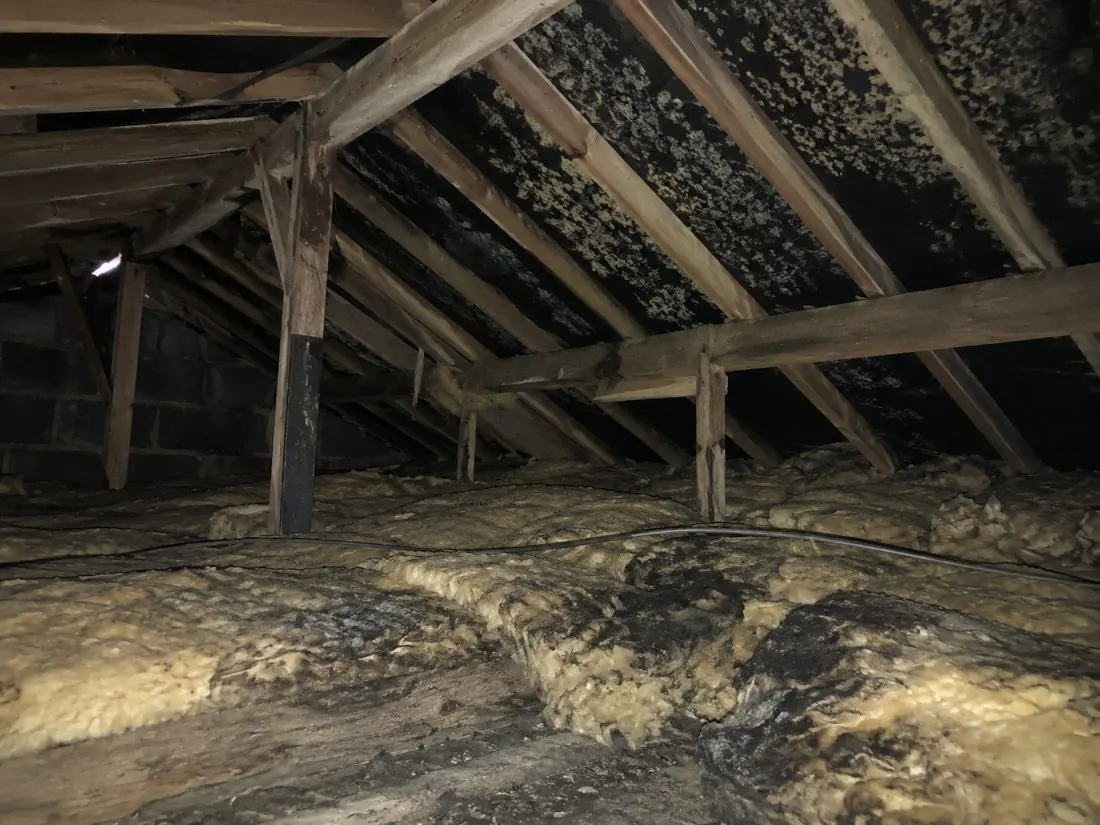
Black spots on the rafters, a musty smell when you open the hatch, or water dripping from the roof felt on a cold morning: these are signs of condensation in the loft. In almost every case, the mould is a symptom rather than the real problem. It grows because the loft is getting more moisture than it can get rid of. Clean it off without fixing the cause, and it will be back next winter.
We deal with mould and condensation in lofts across Middlesbrough, Teesside and the North East. We find out why the loft is damp, put the cause right and treat the affected surfaces. To be clear about what we do: we work in the loft only. We do not carry out damp-proofing of walls, rising damp treatment or work on mould in the rooms of your home.
What causes loft condensation
A cold loft is designed to be cold, with the insulation on the floor keeping heat in the rooms below. That only works if moisture can escape. Condensation happens when more damp air gets into the loft than can get out. The common causes are:
- Blocked ventilation. Insulation pushed hard into the eaves, often during an earlier install, cuts off the fresh air that should flow in at the edges of the roof.
- Insulation fitted wrongly. Gaps, insulation jammed against the roof, or a top-up laid without thinking about airflow can all upset the balance.
- Draughts through the hatch. An uninsulated, unsealed hatch lets warm, moist air from the landing pour into the loft.
- Bathroom or kitchen fans venting into the loft. A fan duct that ends in the loft, has come loose or was never connected sends damp air straight onto the cold roof.
- Gaps in the ceiling around pipes, cables and downlights.
A roof leak can look similar, with damp timbers and staining, but it is a different problem that needs a roofer. Part of our job is telling the two apart.
Signs of condensation and mould in the loft
- Droplets of water on the felt, nails or timbers, often worst on cold mornings.
- Black or dark spotting on the rafters, the roof lining or the underside of boards.
- A musty smell in the loft or on the landing.
- Damp, matted or darkened insulation, especially near the eaves.
- Rusty nails and fixings, or water marks on the ceiling below.
How we deal with it
1. Inspect and find the cause
We check the eaves, the felt or membrane, the timbers, the insulation, the hatch and any fans or ducts in the loft. We look for signs of a roof leak as well as condensation. A loft inspection is the starting point.
2. Fix the ventilation
Insulation is pulled back from the eaves and eaves vent trays fitted where needed, so air can flow through the loft again. See loft ventilation for more on how this works.
3. Cut down the moisture getting in
The hatch is insulated and draught-stripped. Where a bathroom or kitchen fan is venting into the loft, we explain what needs to change so the air goes outside. Any electrical work on the fan itself should be done by a qualified electrician.
4. Treat the mould
Affected timbers and roof lining are treated with a fungicidal treatment to kill the surface mould. Treatment alone is not a cure, which is why it comes alongside fixing the cause.
5. Put the insulation right
Insulation that is damp, mouldy or badly matted should be removed and replaced. New insulation is laid to 270mm with the eaves kept clear. If the existing layer is sound, a top-up may be all it needs.
When it is more than a loft problem
If we find wet or soft timbers, signs of rot, a roof leak, or damp that seems to be coming from somewhere other than the loft, we tell you plainly. Structural timber repairs and roof repairs are for a roofer or builder, and damp in walls is for a damp specialist. We will not offer to treat something we do not do.
Preventing it coming back
- Keep the eaves clear and do not push stored items or insulation into the edges of the loft.
- Make sure extractor fans are used and are ducted outside.
- Keep the hatch closed and its seal in good condition.
- Glance into the loft once a year, especially after a cold spell.
Our guide to loft condensation and ventilation explains the causes in more depth, and our main loft insulation page explains how insulation and ventilation work together.
What affects the cost
The price depends on the size of the loft, how much mould needs treating, what ventilation work is needed, whether insulation has to be removed and replaced, and access. You get a written quotation after a free assessment.
Who does the work
The work is carried out by The Insulation Company or an approved installation partner. Eligible installations come with a written guarantee of up to five years; the terms are set out in your quotation.
Areas we cover
We cover Middlesbrough and Teesside, County Durham, Tyne & Wear, Northumberland, North Yorkshire and York, and parts of West Yorkshire and the East Riding. See all the areas we cover, or call 0800 229 4668 to book a free assessment.
The process
How we handle mould & condensation
- 1
Free assessment
We look at the eaves, felt, timbers, insulation, hatch and any fans, and check for signs of a roof leak.
- 2
Written quotation
You get the cause as we see it, the work needed and the price in writing.
- 3
Fix the cause
Ventilation is restored, the hatch sealed and moisture sources dealt with or explained.
- 4
Treat the mould
Affected timbers and lining are treated with a fungicidal treatment.
- 5
Insulation and checks
Damp insulation is replaced or topped up to 270mm with the eaves clear, and the work is talked through with you.
Mould & Condensation: your questions answered
What causes mould in a loft?
Usually condensation. Warm, moist air from the house reaches the cold roof and has no way out, often because the eaves are blocked, the hatch is unsealed or a bathroom fan vents into the loft.
Can you just clean the mould off?
Treating the mould without fixing the cause means it will come back. We fix the ventilation and moisture sources as well as treating the surfaces.
Do you treat damp walls or mould in rooms?
No. We work in the loft only. Damp in walls and rising damp are jobs for a damp specialist.
Did my new loft insulation cause the condensation?
It can contribute if it was pushed into the eaves or fitted without keeping airflow in mind. Fitted properly, with the eaves clear and the hatch sealed, insulation and a dry loft go together.
Could it be a roof leak instead?
It can be. Leaks and condensation can look similar. We check for both, and if it is a leak we tell you so a roofer can repair it.
Is loft mould dangerous?
Mould in the loft is mainly a problem for the timbers, felt and insulation, but it is still best dealt with. If you have health concerns, speak to your GP.
How much does loft mould treatment cost?
It depends on the loft size, the extent of the mould, the ventilation work and whether insulation needs replacing. You get a written quotation after the free assessment.
Free, no obligation
Ready to arrange a free loft assessment?
Tell us about your property and we will review your loft requirements, then provide a written recommendation and quotation before any work begins.