
Loft insulation
Loft Insulation in Middlesbrough, Teesside & the North East
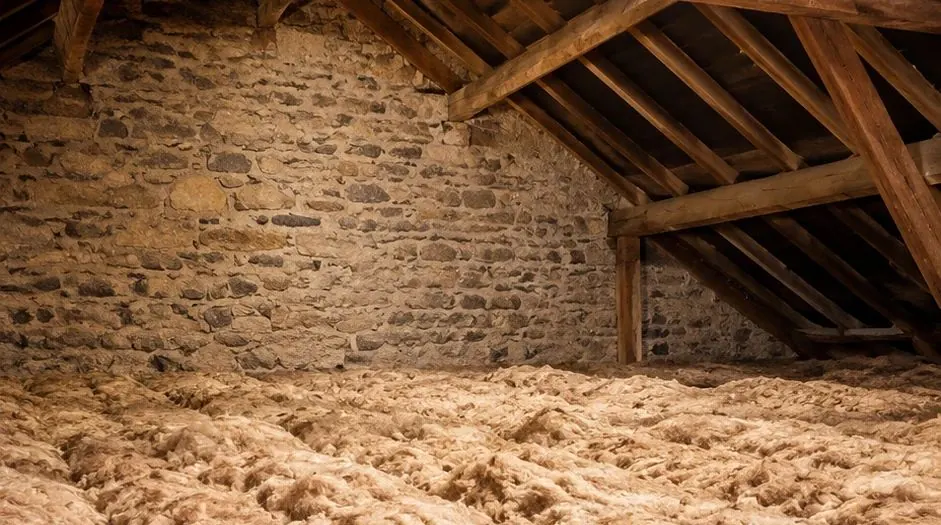
New loft insulation and top-ups to 270mm with non-combustible mineral wool, fitted with the eaves kept clear so the loft stays dry.
- Laid to 270mm
- Knauf Earthwool mineral wool
- Free assessment
- Written quotation
About this service
Loft insulation is a layer of mineral wool laid across the loft floor to keep heat in the rooms below. We fit it to the recommended 270mm in lofts that have none, top up thin layers and remove insulation that has failed.
What’s included
- Free loft assessment and written quotation
- New installations and top-ups to 270mm
- Non-combustible Knauf Earthwool (Euroclass A1)
- Eaves kept clear for ventilation
- Hatch insulated and draught-stripped
- Tanks and pipes in the loft insulated
Priced after a free assessment: see what affects the cost. You get a written quotation before any work is agreed.
Loft insulation is one of the simplest and most effective ways to keep a home warmer. Warm air rises, and in a house with a thin, patchy or missing layer of insulation a lot of that heat escapes through the ceiling and out of the roof. The Energy Saving Trust says that around a quarter of the heat in an uninsulated home can be lost through the roof. A properly fitted layer of mineral wool across the loft floor slows that loss right down.
Middlesbrough Insulation Company works only in lofts. We insulate lofts that have nothing at all, top up lofts that have the thin layer fitted decades ago, and clear out old insulation that is damp, flattened or spoiled. We cover Middlesbrough and Teesside and a wide area of the North East and Yorkshire, and every job starts with a free assessment and a written quotation.
What loft insulation is and who it suits
Standard loft insulation is a blanket of mineral wool laid across the floor of the loft, between and over the ceiling joists. It keeps heat in the rooms below and leaves the roof space above as a cold, ventilated void. This is known as a cold loft, and it is how most pitched-roof houses are built, whether that is a Victorian terrace, an inter-war semi, a post-war council house or a newer estate home.
Loft insulation is likely to suit you if:
- You have a pitched roof with a loft you can get into through a hatch.
- The loft is used for light storage or not at all, and you are not planning a conversion.
- You can see the tops of the ceiling joists, which means there is not much insulation up there.
- The insulation you have is thin, compressed, uneven or missing in places.
- You have recently moved in and do not know what state the loft is in.
If you want to store things in the loft, laying boxes straight onto insulation squashes it. In that case we usually pair new insulation with raised loft boarding, so you keep both the storage and the full depth. If the loft is used as a room, or the roof is too low to fit a deep layer on the floor, SuperFOIL multifoil insulation fitted to the rafters may be the better choice.
How deep should loft insulation be?
The recommended depth for mineral wool loft insulation is 270mm. That figure comes from Energy Saving Trust and building regulations guidance, and it is the depth we work to. Many older homes have far less: 25mm, 50mm or 100mm was common when lofts were first insulated, and even a good layer settles and thins over time.
How to check yours
You can get a rough idea yourself in a couple of minutes, as long as you can get into the loft safely:
- Take a torch and a tape measure or ruler. Only step on the joists or boards, never between them, because the ceiling below will not take your weight.
- Look across the floor. If you can see the tops of the joists, you have less than about 100mm, which is well short of 270mm.
- Push the ruler gently down through the wool to the ceiling below in a few different places, away from the hatch where it is often disturbed.
- Note anything unusual: damp or dark patches, droppings, wool that has been pushed aside or flattened, or areas with none at all.
Our guide on how thick loft insulation should be explains the numbers in more detail. If you would rather not go up there, that is what our free assessment is for.
Signs your loft needs a top-up
- The joists are visible. Insulation should sit well above the timbers, not between them.
- Upstairs rooms feel colder than downstairs in winter, even with the heating on.
- Frost or snow clears from your roof sooner than from similar roofs nearby, which can be a sign of heat escaping through it.
- The insulation is grey, matted or squashed flat, often where things have been stored on it or other trades have walked across it.
- There are gaps around the hatch, at the edges or where cables and pipes have been run.
Our article on the signs your loft needs a top-up goes through each of these. Where the existing layer is clean and dry, a loft insulation top-up brings it up to 270mm without starting again.
Ventilation: keeping the loft dry
Once the loft floor is properly insulated, less heat reaches the roof space, so the loft gets colder. That is exactly what should happen, but it means the loft needs to stay ventilated. Warm, moist air from the house finds its way up through gaps around the hatch, pipes and light fittings, and if it cannot get out again it condenses on the cold underside of the roof. Over time that can lead to damp timbers and mould.
The most common cause of trouble we see is insulation pushed hard into the eaves, where the roof meets the walls. That is where fresh air enters the loft, and blocking it cuts off the airflow. We keep a clear air path at the eaves, using eaves vent trays where they are needed, while still insulating up to the wall plate so there is no cold strip at the edge of the ceiling. We also insulate and draught-strip the hatch so less moist air gets into the loft in the first place.
Homes near the coast, such as those in Redcar, Hartlepool or along the Northumberland and North Yorkshire coastline, and lofts with a bathroom fan that vents into the roof space rather than outside, need particular care here. If your loft already shows signs of damp, see loft ventilation and mould and condensation, and our guide to loft condensation and ventilation.
The materials we use
For a standard cold loft we use Knauf Earthwool mineral wool loft roll. It is a glass mineral wool that is non-combustible (rated Euroclass A1), does not rot and is not a food source for pests. Mineral wool works by trapping still air between its fibres, so it only performs as designed when it is laid at full thickness and left uncompressed.
Laying it in two layers
The first layer goes between the joists, filling the gaps fully and fitting snugly against the timbers. The second layer is laid across the top at right angles to the joists. Cross-laying covers the timbers, which would otherwise let heat through, and staggers the joins so there are no straight gaps for warm air to escape through.
Hatch, tanks and pipes
The hatch is often the weakest part of an insulated ceiling. We insulate the back of the hatch door and fit a draught seal around the frame. Cold water tanks are insulated on the top and sides but not underneath, so a little warmth from below keeps them from freezing. Exposed pipes in the loft are lagged, because the roof space will be colder once the floor is insulated.
Other options
Where wool on the floor is not the right answer, we also fit SuperFOIL multifoil to the underside of the roof, and raised boarding over the insulation where storage is needed. We explain which suits your loft after the assessment.
The survey and installation process
Free assessment
Every job starts with a free assessment of the loft. We measure the existing insulation and check its condition, look at the joists, the eaves and the ventilation, the hatch, tanks and pipework, any wiring and downlights, and look for signs of damp, mould or rodents. That tells us whether a top-up, a full installation or removal of the old insulation is the right step. Our loft inspection page explains what we look at.
Written quotation
You then get a written quotation setting out the scope of the work, the materials and the price. Nothing is agreed until you have it in writing and are happy with it. There is no pressure to go ahead.
What happens on the day
The work is carried out by The Insulation Company or an approved installation partner. On the day, the installers arrive at the agreed time, lay dust sheets on the landing and under the hatch, and set up lighting in the loft. Loft rolls come compressed in their packaging, so they go up through a normal hatch without any trouble.
If old insulation is coming out, it is bagged in the loft before being carried down. The new wool is then laid between the joists and cross-laid to 270mm. The hatch is insulated and draught-stripped, tanks and pipes are insulated, cables are lifted clear where practical, and the eaves are checked to make sure air can still flow. Any boarding or a loft ladder you have asked for can be fitted on the same visit.
How long it takes depends on the size of the loft and what else is involved. Most straightforward jobs are short, and your quotation will tell you what to expect. Our article on how long loft insulation takes covers this in more depth.
Completion checks
Before leaving, the installers check the depth and coverage, make sure the eaves are clear, tidy and vacuum the landing, and talk you through what has been done. Eligible installations come with a written guarantee of up to five years; the terms are set out in your quotation.
What affects the cost
We do not publish set prices, because every loft is different and we would rather quote accurately after seeing it. The main things that affect the price are:
- The size of the loft. A larger floor area needs more material and more time.
- What is already there. Topping up clean insulation is simpler than a full installation, and removing old or contaminated insulation adds labour and disposal.
- Access and clutter. A small hatch, a low roof or a loft full of stored items makes the job slower.
- Extras. Hatch insulation, tank and pipe insulation, eaves vents, boarding or a loft ladder.
Your quotation lists what is included, so you can see what you are paying for. Our loft insulation cost guide explains each factor, and is loft insulation worth it? looks at the benefits more broadly.
Grants and funding
Some households may qualify for help with the cost of loft insulation through government or energy supplier schemes. Whether you qualify depends on the scheme, your circumstances and your home, and schemes change over time, so we cannot promise that funding will be available. Our guide to loft insulation grants explains what to look for and where to check.
Related loft services
Because we only work in lofts, we can sort out the whole space in one go:
- Loft insulation top-up to bring a thin layer up to 270mm.
- Loft insulation removal for damp, soiled or failed insulation.
- Loft inspection for a clear picture of what your loft needs.
- Raised loft boarding for storage without crushing the insulation.
- Loft ladders for safe, easy access.
- SuperFOIL insulation for rafters, attic rooms and low roofs.
- Loft ventilation and mould and condensation work to keep the loft dry.
- Rodent proofing to keep mice and rats out of the loft.
Where we work
We cover Middlesbrough and Teesside, County Durham, Tyne & Wear, Northumberland, North Yorkshire and York, and parts of West Yorkshire and the East Riding of Yorkshire. That includes loft insulation in Middlesbrough, Stockton-on-Tees, Hartlepool, Redcar, Darlington, Durham, Sunderland, Newcastle upon Tyne, York and Leeds, along with many towns in between.
See all the areas we cover to find your town. If it is not listed, call 0800 229 4668 or send us your postcode and we will tell you whether we can help.
Examples from our project library
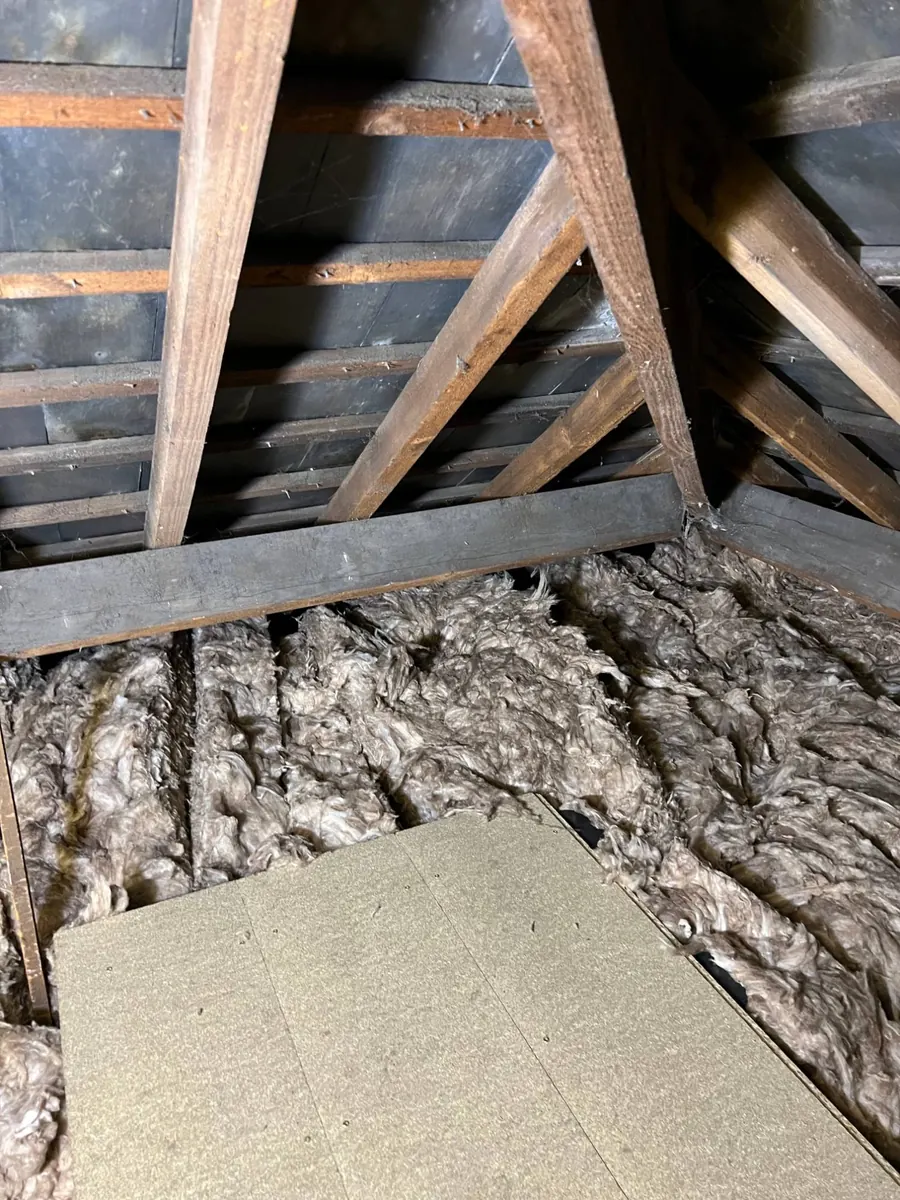
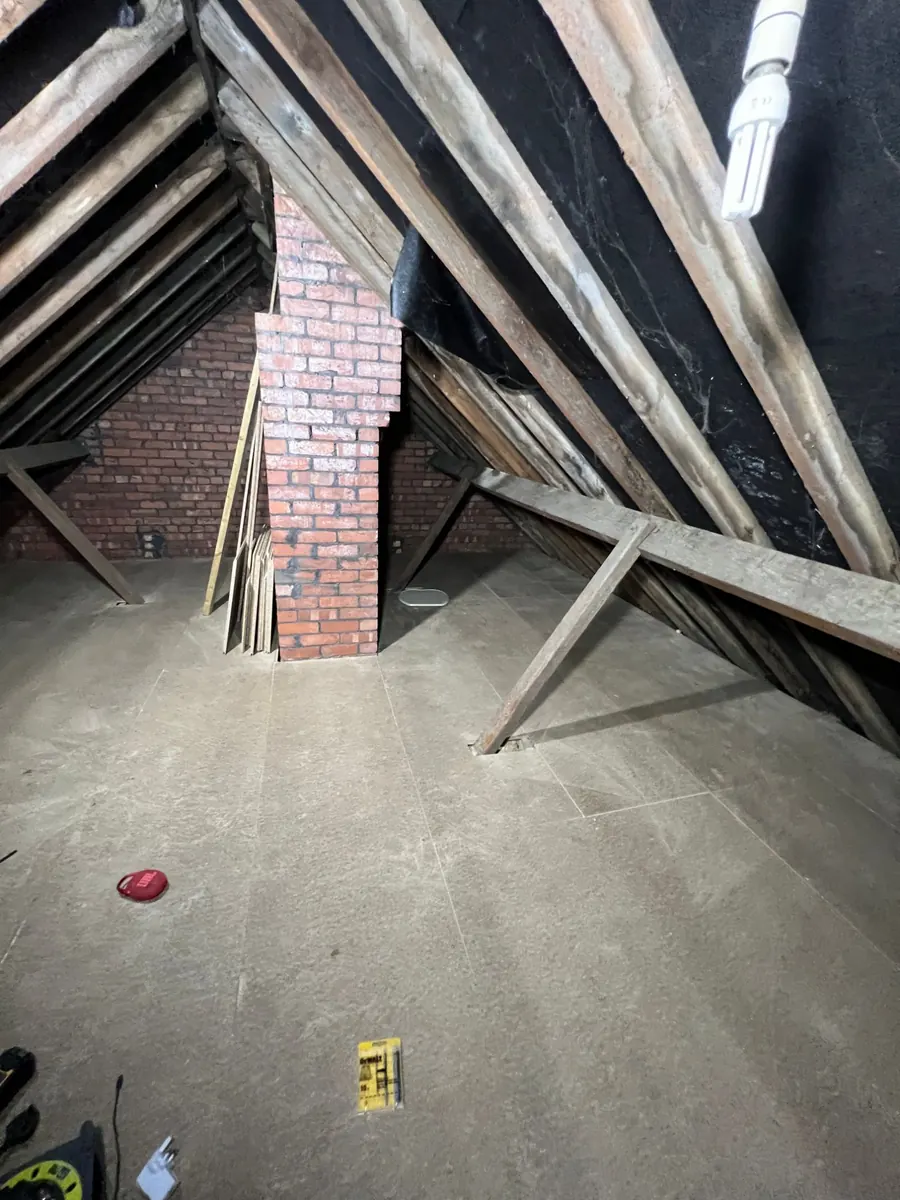
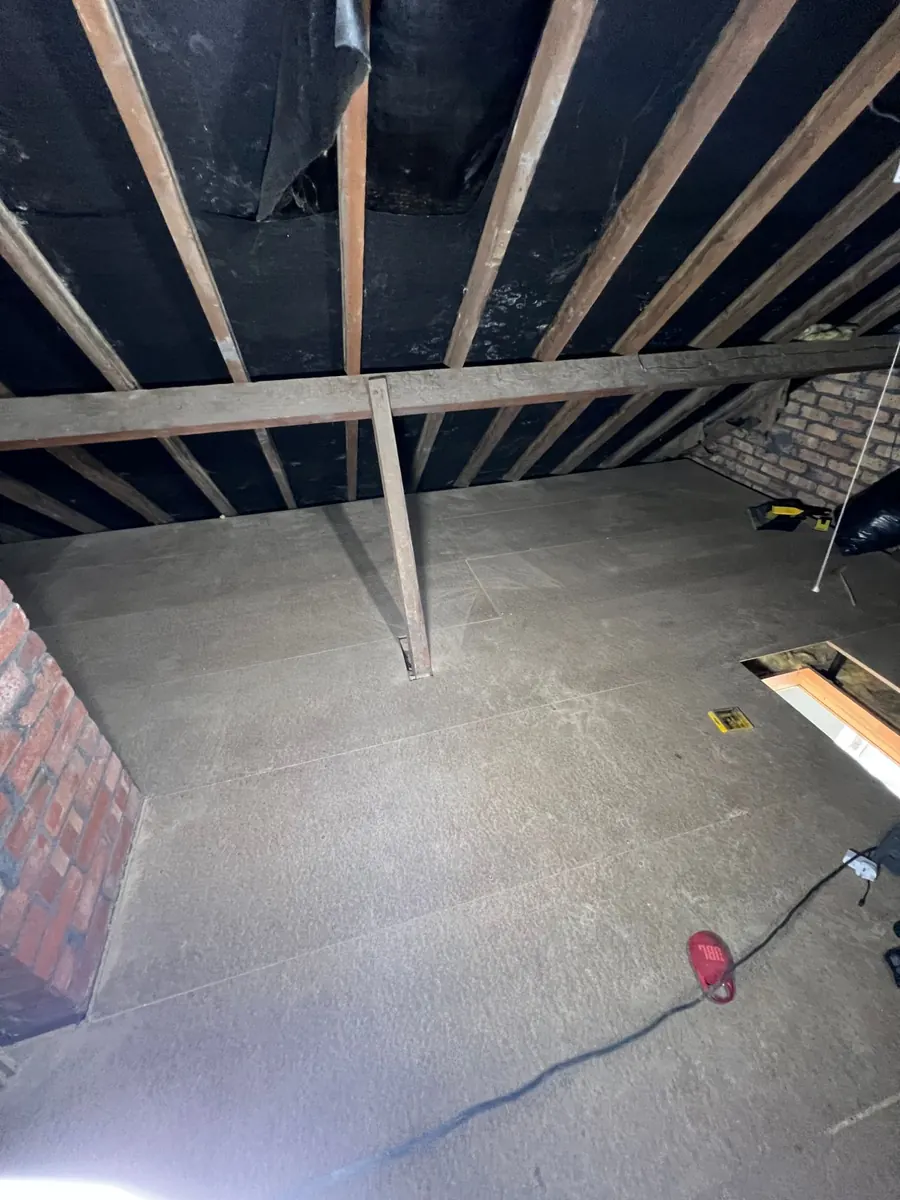
Photos from The Insulation Company’s project library, not jobs in a particular town. Every loft is different: yours is assessed before anything is quoted.
The process
How we handle loft insulation
- 1
Get in touch
Call or use the quote form. Tell us roughly what is in the loft now; a photo helps if you have one.
- 2
Free assessment
We measure the existing insulation and check the joists, eaves, hatch, tanks, wiring and any signs of damp or pests.
- 3
Written quotation
You get the scope, materials and price in writing before anything is agreed, with no pressure to go ahead.
- 4
Installation
The landing is protected, any failed insulation removed, and Earthwool laid and cross-laid to 270mm with the eaves kept clear.
- 5
Completion checks
Depth, coverage and ventilation are checked, the landing is tidied and you are talked through the finished loft.
Loft Insulation: your questions answered
How thick should loft insulation be?
The recommended depth for mineral wool loft insulation is 270mm. We usually lay one layer between the joists and a second across them to reach it, which also covers the timbers so they do not let heat through.
Can you top up the insulation I already have?
Yes, if it is clean, dry and in reasonable condition. We lay new wool over it to bring the total to 270mm. If it is damp, mouldy or soiled by rodents or birds, we recommend removing it first, because covering it hides the problem rather than fixing it. See loft insulation top-up.
Will insulating my loft cause condensation?
Not if it is fitted properly. The loft gets colder once the floor is insulated, so it needs to stay ventilated. We keep the eaves clear so air can flow and draught-strip the hatch to cut down the moist air getting into the loft.
How long does loft insulation take?
It depends on the size of the loft and what else is involved, such as removing old insulation or fitting boarding. Most straightforward jobs are short, and your quotation will tell you what to expect.
Do I need to clear my loft first?
It helps. The installers need access to the whole floor to lay insulation properly. If you cannot clear it yourself, tell us at the assessment and we can talk about the options. Anything you want to store afterwards will need boarding so it does not squash the new insulation.
How much does loft insulation cost?
It depends on the size of the loft, what is already there, access and any extras. We give you a written quotation after a free assessment. Our loft insulation cost guide explains what affects the price.
Can I get a grant for loft insulation?
Some households may qualify for help through government or energy supplier schemes, but it depends on the scheme and your circumstances, so we cannot promise funding. Our guide to loft insulation grants explains where to check.
Who carries out the work?
The work is carried out by The Insulation Company or an approved installation partner. Middlesbrough Insulation Company is a trading name of The Insulation Company UK Ltd.
Is there a guarantee?
Eligible installations come with a written guarantee of up to five years. The terms are set out in your quotation.
Which areas do you cover?
We cover Middlesbrough and Teesside, County Durham, Tyne & Wear, Northumberland, North Yorkshire and York, and parts of West Yorkshire and the East Riding of Yorkshire. See all the areas we cover.
Free, no obligation
Ready to arrange a free loft assessment?
Tell us about your property and we will review your loft requirements, then provide a written recommendation and quotation before any work begins.